
Sparks of Tomorrow Review Roundup: Kyoto Animation's Ambitious Return Dazzles Critics
Kyoto Animation's Sparks of Tomorrow has earned widespread critical praise for its painterly Meiji-era Kyoto and layered characters, though some reviewers flag tonal friction between glossy designs and impressionistic backgrounds.
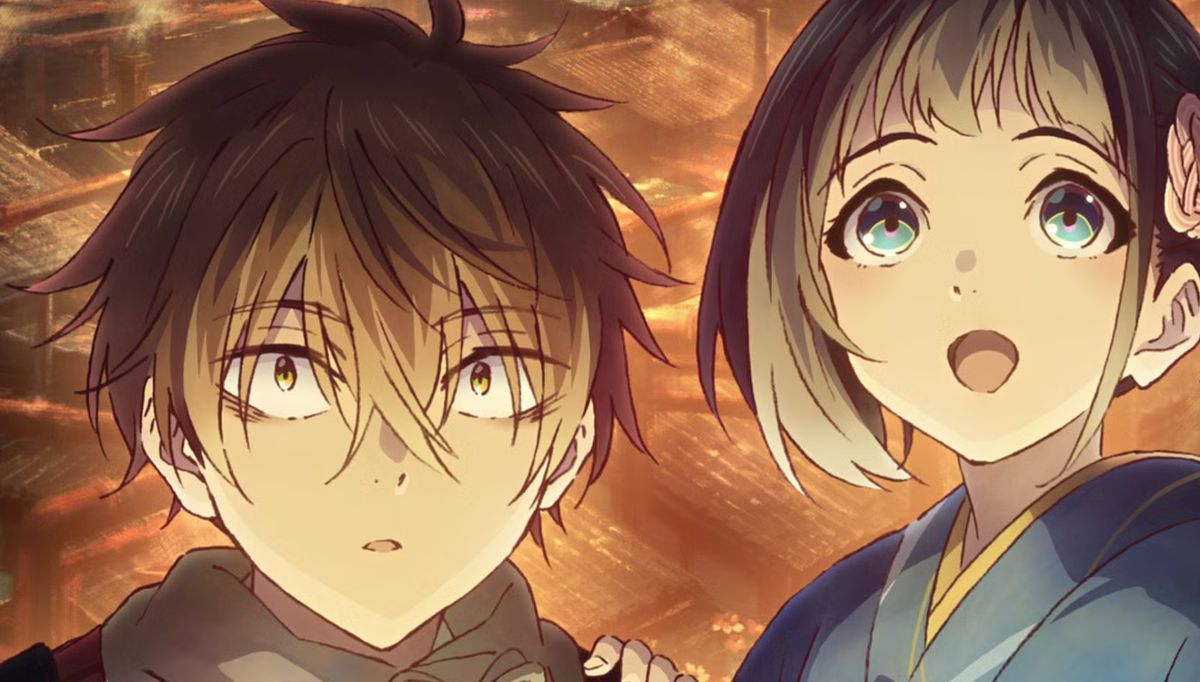
Kyoto Animation's Sparks of Tomorrow debuted on Netflix on July 5, 2026, and early critical reception has been overwhelmingly positive. The alternate-history steampunk series, helmed by debut director Minoru Ota, has drawn praise for its painterly visual style and richly detailed world-building, even as some reviewers flag tonal inconsistencies between its artistic ambitions and comedic beats.
An Alternate-History Kyoto Driven by Steam
Sparks of Tomorrow is set in a reimagined Meiji-era Kyoto where steam technology dominates daily life. The series follows Inako Momokawa, a spirited young woman betrothed to a branch manager of the city's steam monopoly, and Kihachi Sakamoto, an engineer whose late brother championed electricity as the energy of the future. Together, they search for a missing catalog that could bring electric power to the smoke-filled streets of Kyoto, challenging the industrial status quo.
The show is adapted from Hiro Yuki's novel 20 Seiki Denki Mokuroku, and producer Satori Senami has described the project as Kyoto Animation's "new frontier" - a deliberate creative leap following the studio's years of rebuilding after the devastating 2019 arson attack. That context gives the series an emotional weight that extends well beyond its narrative. Sparks of Tomorrow is not just an anime premiere - it is a statement of creative renewal from one of the industry's most beloved studios.
Painterly Visuals Earn High Marks
The most consistent thread across critical responses is admiration for the show's striking visual identity. Director Ota has described the production approach as "80% digital but 20% analog," blending impressionistic painting techniques with modern digital animation tools. The result is a look that stands apart from virtually everything else airing this season.
Critic Allyson Johnson awarded the series a 9 out of 10, calling it "one of the single most stunning anime adaptations of the year." Johnson highlighted the backgrounds' "watercolor effects and brushstrokes" with visible canvas texture, noting one particular scene that evokes the work of J.M.W. Turner through its "burnt orange pigments." The shrine environments display the "wear and tear" of lived-in spaces, while broader cityscapes capture the grimy, matte quality of an industrial city choked by coal smoke and steam exhaust.
This painterly approach reaches its most ambitious expression in a sequence depicting Kihachi's futuristic fantasy vision, which has been described as "breathtaking and wondrous." The sequence departs markedly from the polished, clean aesthetic typically associated with Kyoto Animation's output, signaling that the studio is deliberately pushing into unfamiliar artistic territory with this project.
Character Depth Beyond Archetypes
Critics have responded warmly to the show's character writing, which layers genuine complexity beneath initially familiar anime archetypes. Johnson describes Kihachi as a cynical scientist who is a "self-described scaredy-cat" yet becomes "impossibly smug and overeager when talking about things he's passionate about." That internal contradiction gives him a texture that elevates him far above the standard male lead.
Inako's confidence and belief in others is presented as a genuine strength rather than simple naivety, though the series hints at deeper complications beneath that optimism. Meanwhile, the antagonist Yosuke Mizoe has drawn particular attention from reviewers. Johnson notes that his "flamboyance and melodramatics aren't so much a performance as they are practiced armor," suggesting the series is building toward a more nuanced antagonist than viewers might initially expect.
Kyoto Animation's hallmark attention to subtle character animation - the micro-expressions, the pauses, the physicality of everyday movement - remains fully intact. Ordinary moments like a conversation, a walk through town, or a quiet beat observing unfamiliar technology receive the same meticulous care that many studios reserve for elaborate action sequences. Johnson praised this quality directly, noting that the studio's ability to make ordinary moments feel extraordinary is "on full display here."
Where the Seams Show
Despite the overwhelmingly positive reception, reviewers have identified a recurring friction point: the relationship between the show's glossy character designs and its hand-painted backgrounds. Johnson observes that the characters possess an "overt shininess" that can create a visual disconnect from the textured, impressionistic environments they inhabit. The CGI and 3D elements occasionally feel "jarring" when layered against those same watercolor-inspired backdrops, pulling viewers out of scenes that otherwise achieve a remarkable sense of atmosphere.
Tonal consistency is the other concern flagged in reviews. The series pivots between introspective drama and cartoonish physical comedy, and Johnson notes that these "tonal shifts can be jarring." The comedic beats - while praised individually for their timing and execution - sometimes land awkwardly against the more contemplative, artistically ambitious sequences that bookend them. For a show that clearly aspires to a specific emotional register, the sudden shifts into broad humor can feel like momentary retreats from its own ambition.
These are not dealbreaking criticisms, and reviewers largely treat them as the growing pains of a debut director finding his footing rather than structural flaws in the production itself. Director Ota's willingness to take creative risks with the visual language has been credited as giving the series a "personality and individuality" that outweighs the occasional aesthetic seam.
Streaming and Music
Sparks of Tomorrow streams exclusively on Netflix, with new episodes premiering every Sunday throughout the Summer 2026 season. The series features an opening theme by Luna Goami and an ending theme produced and performed by Cameron Lew of Ginger Root, adding a distinctive musical identity that complements the show's visual ambitions.
With multiple episodes now available and critical sentiment firmly positive, Sparks of Tomorrow has established itself as one of the most closely watched new anime of the summer. Kyoto Animation's decision to entrust a debut director with such a high-profile project appears to be paying dividends, delivering a series that feels both like a continuation of the studio's legacy and a genuine step into new creative territory.
Your anime week, in your inbox
Upcoming episodes, seasonal picks, and anime updates worth knowing.