
Production I.G President George Wada Calls for a Japanese Anime Awards Amid Crunchyroll Criticisms
Production I.G and WIT Studio president George Wada has called for a Japanese anime awards system as industry criticism of the Crunchyroll Anime Awards intensifies over panel composition and platform bias.
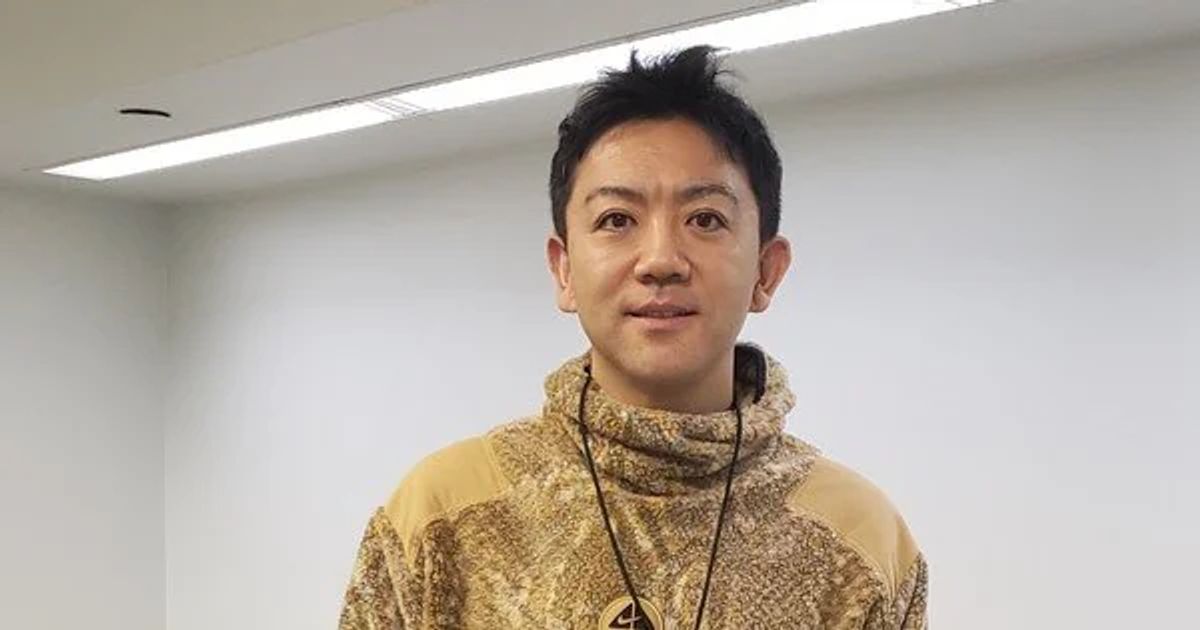
Production I.G and WIT Studio president George Wada has publicly called for the creation of a Japanese anime awards system, adding a prominent industry voice to the growing chorus of criticism directed at the Crunchyroll Anime Awards over issues of panel composition, platform bias, and the sidelining of Japan's own anime professionals.
Wada's Call at Industry Sustainability Conference
Wada made his remarks on April 16 during a conference focused on the sustainability of Japan's anime industry. His proposal for "a Japanese version of anime awards" was part of a broader set of recommendations that also included improvements in human resources, working conditions, and skills certification for anime professionals. The comments, which surfaced publicly in late May, have since reignited a debate that has simmered for years within industry circles.
Wada was not the only executive to speak at the conference. Representatives from major studios including MAPPA president Manabu Otsuka, Toei Animation's Kiichiro Yamada, Nippon Animation's Kazuko Ishikawa, A-1 Pictures' Akira Shimizu, and executives from Bandai Namco Filmworks and Avex Pictures all addressed different aspects of the industry's future. Topics ranged from in-house IP management and animator training to piracy countermeasures and global distribution infrastructure. Liberal Democratic Party politician Fumiaki Kobayashi also discussed public-private partnership potential, underscoring the government's growing interest in anime as a cultural export.
The Case Against the Crunchyroll Anime Awards
The criticisms Wada's proposal implicitly addresses have been building for several awards cycles. Industry professionals have raised pointed concerns about the structure and intent of the Crunchyroll Anime Awards, which reported 73 million votes for its 2026 edition.
One of the most fundamental objections centers on geography. The editor-in-chief of a major Japan-based entertainment publication has noted that Crunchyroll's service is completely geoblocked in Japan, meaning the awards are structurally not targeted toward a Japanese audience despite celebrating a Japanese art form. This disconnect has frustrated creators and executives who feel the ceremony speaks over them rather than to them.
Panel composition has drawn equally sharp scrutiny. Critics point out that the awards panels include barely any professionals working in the anime industry, with panelists drawn instead from journalism and content creation fields that incentivize mainstream opinions over informed craft assessment. The panelist selection process itself remains opaque, with Crunchyroll controlling the process without meaningful transparency.
Conflict of Interest and Branding Concerns
Beyond the panel, deeper structural criticisms have emerged. An international distributor described the awards as functioning primarily as "a marketing gimmick to brand anime as an entire medium with the Crunchyroll logo." A production insider stated plainly that "awards should be neutral" and "shouldn't be owned, run, and branded by one controlling platform."
The awards have also faced criticism for a lack of diversity in their selections and an overt focus on series at the height of their popularity, potentially at the expense of more critically accomplished but less commercially prominent works. Marketing relationships between Crunchyroll and the titles it heavily promotes raise further questions about whether the awards can serve as a genuine measure of excellence. Promotional materials for the ceremony have been noted to feature influencers, brand ambassadors, American celebrities, and Crunchyroll team members almost exclusively, rather than the Japanese creators whose work is ostensibly being honored.
Jerome Mazandarani, former Managing Director of Manga Entertainment, and several other named and unnamed industry professionals from across Europe, Japan, and the international distribution space have added their voices to these concerns.
What a Japanese Alternative Could Look Like
Wada's proposal remains at the advocacy stage, with no concrete organizational structure or timeline announced. However, the breadth of executive participation at the April conference suggests that the appetite for industry-led alternatives is genuine. A Japanese-organized awards body could theoretically address the core complaints by centering professional evaluators, eliminating platform conflicts of interest, and ensuring that Japan's creative community has ownership over how anime excellence is recognized on the global stage.
The debate arrives at a moment when anime's international commercial footprint has never been larger, making the question of who defines quality in the medium increasingly consequential for studios, distributors, and audiences worldwide.
Your anime week, in your inbox
Upcoming episodes, seasonal picks, and anime updates worth knowing.