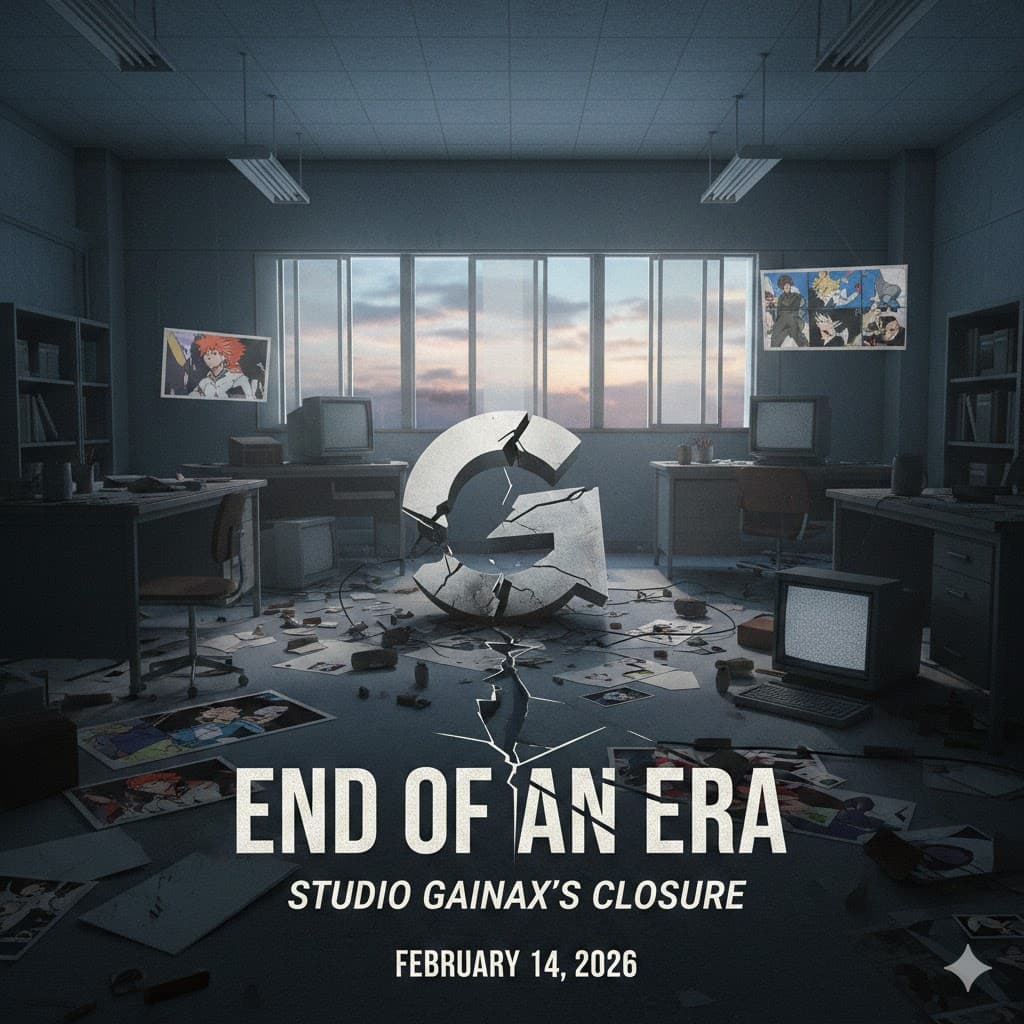
Studio Gainax, the legendary studio behind Evangelion, has closed its doors after 42 years. This is more than just a company closing; it's a profound shift for the anime world.
For decades, the name Gainax was synonymous with innovation, ambition, and often, glorious chaos. The studio that gave us Neon Genesis Evangelion, Gurren Lagann, and FLCL has officially closed its doors after 42 years. This isn't just another company going out of business; it’s a seismic event for the anime industry, marking the end of a legendary, albeit troubled, chapter. The closure, heavily criticized by Evangelion creator Hideaki Anno for long-standing financial mismanagement, prompts a crucial reflection on creative legacy, industry instability, and the challenges faced by even the most iconic studios.
For Indian fans who grew up watching Gainax's genre-defining works, this news hits hard. It’s a reminder that even the biggest names in anime are not immune to the harsh realities of the business, and that creative brilliance alone doesn't guarantee longevity.
Studio Gainax was founded in the early 1980s by a group of passionate, often rebellious, young animators, including Hideaki Anno, Yoshiyuki Sadamoto, and Shinji Higuchi. Their early works, like Royal Space Force: The Wings of Honnêamise, immediately showcased an artistic ambition and technical prowess that defied industry norms. They weren't just making anime; they were pushing its boundaries.
These works didn't just entertain; they challenged audiences and pushed the medium forward.
Despite its creative triumphs, Gainax struggled with financial management. Following Evangelion's success, key figures began leaving. Hideaki Anno departed to form Studio Khara. Other talent followed, seeking stability elsewhere.
By the 2010s, Gainax was a shell of its former self. Projects became sporadic. The studio's reputation couldn't sustain it without the visionaries who built it.
Anno's public criticism of Gainax's financial mismanagement was damning. The studio that created one of anime's most profitable franchises somehow couldn't maintain financial stability.
Gainax's closure is a cautionary tale: creative genius doesn't guarantee business survival. The anime industry is notoriously difficult, with thin margins and high risk.
Even legendary studios can collapse if business fundamentals aren't respected. Gainax's legacy lives through its works and the creators it inspired, but the studio itself couldn't survive its own success.
For Indian fans, Gainax represents an era when anime took bold creative risks. Its closure marks the end of that particular chapter, even as its influence continues through studios like Trigger and Khara.
Gainax may be gone, but its impact is permanent. Every experimental anime, every psychological mecha series, every creator willing to challenge convention—Gainax's spirit lives there.
The studio is dead. The legend isn't
Weekly updates on the latest releases and announcements.