These 7 soundtracks aren't just accompaniment. They're characters themselves.
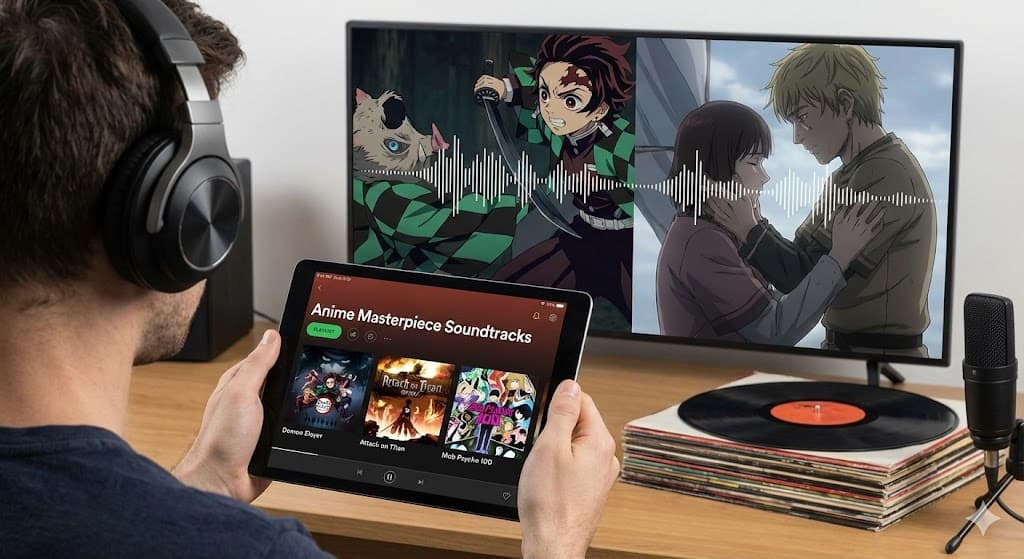
Great anime music doesn't sit in the background. It speaks. It argues. It contradicts. It becomes part of the storytelling.
Here are 7 soundtracks that do more than enhance scenes-they fundamentally change how those scenes hit emotionally.
Why It's Essential: Yuki Kajiura's score for Demon Slayer doesn't just accompany fights. It elevates them into something mythic.
The use of traditional Japanese instruments mixed with modern composition creates a cultural identity. When Tanjiro's theme plays, you don't just see him fighting. You feel the weight of his responsibility, his grief, his determination.
Listen to the Rui fight theme-it's not just scary music. It's oppressive. The music itself makes you feel trapped, like the terrain itself is suffocating. The score creates atmosphere that animation alone couldn't.
Where it hits hardest: Any major fight. The music somehow makes each battle feel like a culmination of everything that came before.
Why It's Essential: Kenji Kawai's restraint is the point. Most scenes are quiet. But when the music swells, it decimates.
The show understands that silence is powerful. So the music is sparse but intentional. When Mob finally breaks emotionally, the music doesn't overpower. It accompanies the breakdown, respecting the character's moment.
The opening theme "99" is deceptively complex-starts calm, builds intensity, reflects Mob's internal struggle perfectly.
Where it hits hardest: Reigen's confession scene, Mob's final breakthrough. The music respects the emotional weight instead of trying to amplify it synthetically.
Why It's Essential: Sawano's score for Attack on Titan is basically a character. It tells the story alongside the narrative.
Early themes are aggressive, chaotic, matching humanity's desperation. As the story reveals deeper truths, the music evolves. Later soundtracks incorporate melancholy, introspection, even tragedy.
Sawano's signature style-epic orchestral swells, German lyrics, choirs-turns every moment into something monumental. Even quiet character conversations feel like they matter because the music tells you they do.
Where it hits hardest: Any Levi combat scene. The music makes you feel like you're watching mythology unfold.
Why It's Essential: Yoko Kanno's jazz-fusion score for Cowboy Bebop isn't just music. It's the soul of the show.
Every episode has a different musical identity. Jazz, blues, rock, opera, techno. The soundtrack shifts with the story, matching the episodic structure. The music doesn't follow the narrative-it is the narrative.
The iconic opening "Tank!" sets the tone: chaotic, energetic, unpredictable. When "The Real Folk Blues" plays, you know something emotional is about to break you.
Where it hits hardest: The final episode. "Blue" plays as Spike walks to his fate. The music says everything the dialogue doesn't.
Why It's Essential: Kevin Penkin's score for Made in Abyss uses music to create emotional whiplash. It's beautiful and horrifying simultaneously.
The Abyss feels alive because the music gives it presence. When Riko and Reg descend, the music shifts from wonder to dread without warning. Penkin uses choirs, strings, and unconventional instruments to create a soundscape that feels ancient and alien.
The emotional scenes don't need dialogue. The music tells you exactly how to feel-and it's devastating.
Where it hits hardest: Mitty's scene. The music turns that moment from tragic to genuinely haunting.
Why It's Essential: Evan Call's orchestral score for Violet Evergarden is restrained, elegant, and emotionally surgical.
The show is about grief, healing, and learning to feel. The music reflects that journey. Early episodes have sparse, melancholic piano. As Violet grows emotionally, the music becomes richer, fuller, more hopeful.
The score doesn't manipulate. It accompanies. When you cry during Violet Evergarden, it's because the story earned it-but the music made sure you felt it fully.
Where it hits hardest: Episode 10. You know the one. The music amplifies the heartbreak without overpowering it.
Why It's Essential: Samurai Champloo's hip-hop soundtrack shouldn't work with a samurai period piece. But it does. Perfectly.
Nujabes' jazzy, lo-fi beats create a vibe that's anachronistic and timeless. The music makes fight scenes feel like rhythmic dance. Emotional moments hit harder because the music is understated, contemplative.
The show proves that music doesn't have to match the setting historically-it has to match the feeling.
Where it hits hardest: The final episode's ending montage. "Shiki no Uta" plays, and suddenly everything feels bittersweet and inevitable.
Great anime music doesn't just support scenes. It transforms them. It gives emotion texture. It creates atmosphere that animation alone can't achieve.
These seven soundtracks prove that composers are as essential to anime as directors and animators. They're not background workers. They're storytellers.
Next time you watch anime, pay attention to when the music plays, when it stops, and how it makes you feel. You'll start noticing the choices-and you'll appreciate the craft even more
Weekly updates on the latest releases and announcements.