Most anime treat romance as plot twist. These five understand that relationships are the story.
Anime romance usually follows one of two patterns:
Will they/won't they: Characters are separated by circumstance or misunderstanding. Tension resolves with kiss. Series ends.
Love triangle: Two viable options. Choose one. Drama ensues. Winner gets relationship. Loser disappears.
Not much thought about what happens after confessions. What relationships actually require. How two people navigate genuine commitment.
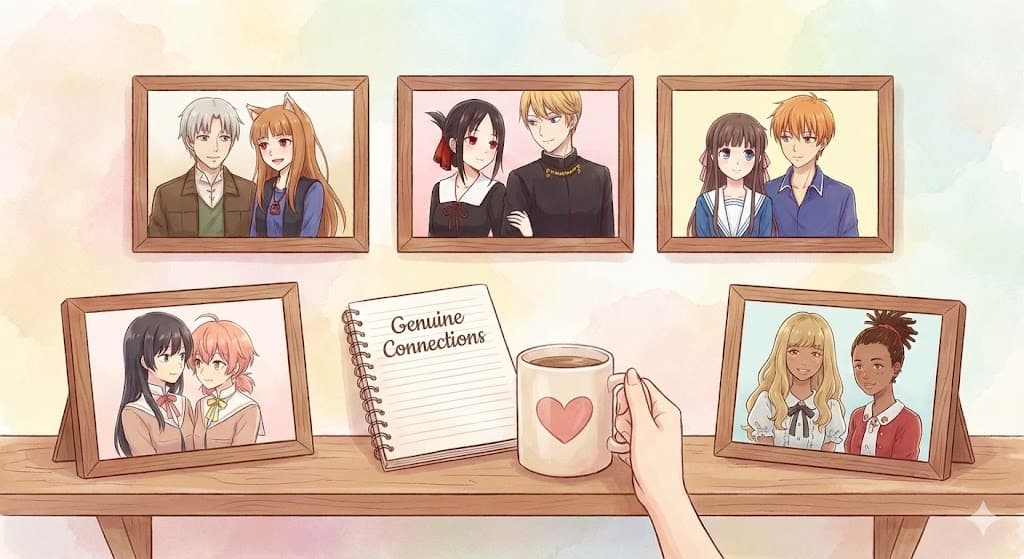
Here are 5 anime that understand relationships as complex, ongoing, nuanced-not just narrative endpoints.
The Setup: Lawrence, a merchant, meets Holo, a wolf deity. They travel together making business deals. Romance develops through collaboration, not separation.
Why It Understands Relationships:
Their relationship is functional. They need each other for practical reasons, but the emotional connection matters equally. Holo doesn't exist to be rescued. Lawrence doesn't exist to claim her.
They're partners solving problems together. Romance emerges from respect and interdependence, not destiny or fate.
Conflicts aren't about "will they get together?" They're about real collaborators disagreeing on strategy, priorities, future plans. Actual relationship problems.
The anime shows them figuring out how to be together while maintaining individual goals. That's mature relationship writing.
Where It Excels: Episodes where they argue about business strategy and it reveals deeper anxieties. The economics are the romance framework.
The Setup: Two brilliant students hide the fact they're in love because admitting feelings "loses" the psychological war. Romantic tension through strategic maneuvering.
Why It Understands Relationships:
On surface, it's hilarious games. But underneath, it's about the vulnerabilities people hide in relationships.
Both characters are terrified of rejection, so they create elaborate schemes to force the other person to confess first. That fear-the inability to be vulnerable-is intensely relatable.
The show doesn't mock this. It treats emotional self-protection seriously while making it absurdly funny. And when they finally drop the games and communicate honestly? The payoff feels earned because we watched them struggle with vulnerability for seasons.
Where It Excels: The moments when their schemes backfire because genuine emotion breaks through. The show understands that love requires risk.
The Setup: Hori and Miyamura start dating early in the series. The story focuses on maintaining a relationship, not just starting one.
Why It Understands Relationships:
Most romance anime end when the couple gets together. Horimiya starts there.
The show explores what happens after confessions: meeting each other's families, navigating friend dynamics, dealing with insecurities, learning each other's boundaries. Real relationship maintenance.
They don't fight dramatically over misunderstandings. They communicate like adults. When problems arise, they talk. That's revolutionary for anime romance.
The relationship isn't perfect-they have awkward moments, disagreements, and vulnerability. But they work through it together. That's what makes it feel real.
Where It Excels: Quiet domestic moments. Studying together, casual conversations, comfortable silence. The show treats intimacy as everyday compatibility, not grand gestures.
The Setup: Takeo, a large intimidating guy with a huge heart, falls for Yamato, a sweet girl who likes him back immediately. They get together by Episode 3.
Why It Understands Relationships:
The genius of Ore Monogatari is removing the "will they/won't they" entirely. They're together. Now what?
The show focuses on how they support each other. Takeo's insecurities about his appearance. Yamato's desire to be seen as more than just "cute." They don't solve each other's problems-they help each other grow.
There's no manufactured drama. No jealous rivals breaking them apart. Just two people genuinely trying to be good partners. It's wholesome without being unrealistic.
Where It Excels: Scenes where Takeo's friends assume Yamato couldn't possibly like him, but she shuts down that nonsense immediately. The show respects mutual attraction.
The Setup: Two working adults who are closet otaku start dating. They navigate romance while maintaining careers, hobbies, and adult responsibilities.
Why It Understands Relationships:
Wotakoi is about adults with lives outside of romance. They don't drop everything for each other. They balance work, friendships, personal interests, and relationship.
The conflicts are practical: scheduling dates around busy work weeks, deciding how much to share hobbies with a partner, managing expectations when both people are introverted.
No dramatic breakups over misunderstandings. Just adults figuring out how to fit another person into an already established life. That's what real adult relationships look like.
Where It Excels: The double dates with their friends, who are also navigating relationship dynamics differently. The show presents multiple models of healthy relationships.
The common thread: relationships are ongoing processes, not destinations.
These anime understand that "getting together" isn't the end. It's the beginning. The real story is how two people navigate compatibility, communication, compromise, and growth together.
They don't rely on contrived misunderstandings or jealousy subplots. They explore genuine relationship challenges: vulnerability, insecurity, communication, balance.
Most importantly, they treat both partners as equals. No one exists solely to complete the other. They're individuals who choose to build something together.
That's what respectful relationship writing looks like
Weekly updates on the latest releases and announcements.